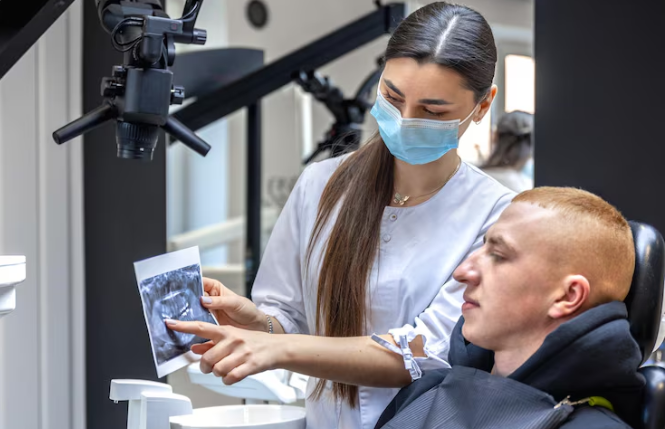

You might be feeling a mix of hope and worry right now. Maybe you are tired of hiding your smile in photos, or you are scared every time you chew on the “wrong” side, or you are wondering if you are too old, too anxious, or too medically complex for dental implants to work for you. A Lake Ridge periodontist can help you explore your options and find out what’s possible.
At the same time, you may have heard that implant dentistry is changing fast and that there are “new options,” but no one has really slowed down to explain what that means in plain, human terms. Because of this tension, you might wonder if you should just put it off and live with the discomfort you already know.
Here is the short version. Modern implant dentistry has become more precise, more predictable, and more comfortable than it was even a few years ago. Four key advances are reshaping what is possible. Better planning with 3D imaging, improved implant materials, less invasive techniques, and smarter ways to manage healing and long term maintenance. Understanding these can help you decide whether now is the right time to move forward with a periodontist and implant dentist you trust.
Why does getting dental implants feel so overwhelming in the first place?
Before talking about innovation, it helps to honor what you might already be carrying. Losing a tooth is not just a “dental issue.” It can affect how you eat, how you speak, and how you see yourself in the mirror. You might feel embarrassed, older than you are, or worried about what others notice first when you smile.
Then come the practical questions. How many appointments will this take. Will it hurt. How long will I be without a tooth. Will the implant fail. Will this be a waste of money. It is very normal to feel stuck between wanting a strong, natural looking tooth replacement and fearing the process and cost of getting there.
So where does that leave you. It leaves you needing clear, honest information and a path that respects both your health and your peace of mind. That is where understanding today’s innovative advances in implant dentistry can change the conversation.
Advance #1: How 3D imaging and digital planning reduce guesswork
One of the biggest shifts in modern implant care is how thoroughly your jaw and bone can be studied before anyone ever touches a drill. Instead of relying only on 2D X rays, many periodontists and implant dentists now use cone beam CT scans that create a 3D model of your mouth.
With that model, your dentist can measure bone height and width, map out nerves and sinus spaces, and plan the exact angle and depth of the implant. This is not just about fancy technology. It is about reducing surprises and lowering risk. The National Center for Biotechnology Information describes how these scans help with accurate diagnosis and safer treatment planning in oral and maxillofacial procedures.
Digital planning software can also be used to create a physical guide that fits over your teeth or gums during surgery. That guide helps the dentist place the implant in the exact position planned on the computer. For you, this can mean a shorter procedure, less trauma to the bone, and often a smoother recovery.
If you are someone who worries about “what if they hit a nerve” or “what if they put it in the wrong place,” this type of planning can offer real peace of mind.
Advance #2: Stronger, more natural materials for long term success
Another quiet but important change is what implants and crowns are made of today. Traditional titanium implants are still widely used and well studied. The U.S. Food and Drug Administration explains that these devices are designed to bond with bone and serve as a long term foundation for replacement teeth.
However, newer surface treatments and coatings are being developed to encourage bone to attach more quickly and securely. Research supported by the National Institute of Dental and Craniofacial Research is focused on creating dental materials that are both strong and kind to surrounding tissues. This includes work on ceramics and other materials for people who may be sensitive to metals.
Beyond the implant itself, the crown that you see in your mouth has improved as well. Modern ceramics are designed to reflect light more like natural enamel. They can be carefully matched to the color and shape of your own teeth, which helps the implant blend into your smile instead of standing out.
So if you fear ending up with a “fake looking” tooth, newer materials and design tools used by a skilled implant dentist can make a big difference.
Advance #3: Less invasive techniques and more comfortable healing
Many people imagine implant surgery as a very aggressive procedure with a painful recovery. That picture is often based on older techniques or worst case stories. Today, careful planning and gentler surgical methods allow many patients to experience less swelling, less discomfort, and shorter healing times.
For example, with guided surgery based on 3D planning, the incision can sometimes be smaller, and the amount of bone that needs to be exposed can be reduced. In some cases, when conditions are right, an implant can be placed at the same visit as a tooth extraction, which may cut down on the number of surgeries you need.
There is also better understanding of how to support healing. Your periodontist may use approaches that concentrate your own blood platelets to support tissue repair, or use modern bone graft materials that are well researched and designed to work with your body. Information from clinical sources such as evidence summaries on implant procedures describes how technique and planning affect outcomes and healing.
This does not mean there is no soreness or that every case is simple. It does mean that compared with older methods, many people are surprised by how manageable the healing process feels when care is tailored to them.
Advance #4: Smarter long-term care so implants last
The story does not end when the crown is placed. The real goal is a replacement tooth that feels natural and stays stable for many years. One of the most important advances in modern implant dentistry is how much more attention is paid to maintenance and prevention of problems like peri-implant disease.
Periodontists are gum and bone specialists, so they focus not only on placing the implant, but on keeping the surrounding tissues healthy. This includes personalized home care instructions, regular professional cleanings that use tools and techniques designed for implants, and periodic checks of the bite and the implant’s stability.
There is growing research on how conditions such as diabetes, smoking, or a history of gum disease affect implant outcomes. This helps your dental team create a plan that fits your medical reality, not a one-size model. When you combine better planning, stronger materials, gentler surgery, and thoughtful long-term care, the chances of success increase significantly.
How do these advances compare with “traditional” implant care?
It can be helpful to see how these innovations change your experience compared with older approaches. Every case is unique, but here is a general comparison.
| Aspect | Traditional Approach | With Newer Advances |
|---|---|---|
| Planning | 2D X rays, more visual estimation | 3D imaging, digital planning, surgical guides for accuracy |
| Surgery | Larger incisions, more bone exposed | Often smaller incisions, targeted access, less tissue trauma |
| Materials | Standard titanium implants and porcelain crowns | Enhanced implant surfaces, advanced ceramics, options for sensitivities |
| Healing Experience | More swelling and soreness in many cases | Often smoother recovery when planning and technique are optimized |
| Long Term Care | General cleanings, less focus on implant-specific risks | Targeted maintenance, monitoring for peri-implant disease and bite issues |
If you are trying to decide whether to move forward now or wait, it is worth knowing that the standard of care has shifted. Waiting several more years does not always bring huge new breakthroughs, but it can allow bone and gums to change, which may complicate treatment later.
What can you do right now to move from worry to a clear plan?
Knowing that these advances exist is one thing. Turning them into a plan that fits your life is another. Here are three practical steps you can take, even if you are not ready to commit yet.
1. Schedule a true diagnostic consultation, not a quick look
Ask for a consultation with a periodontist and implant dentist who uses 3D imaging and digital planning. You want more than “yes, you are a candidate.” You want to see your bone in 3D, understand your risk factors, and hear specific options for your situation.
Prepare a short list of questions, such as:
How will you plan my case? What imaging will you use? What are the main risks for me personally? How many implant procedures have you done that are similar to mine? What will the healing period look like for me?
2. Ask about materials and long term maintenance
You have the right to know what will be placed in your body and how it will be cared for. Ask which implant system will be used and why. Ask how they handle patients with medical conditions like diabetes or a history of gum disease. You can also review trusted sources, such as the FDA’s information on dental implants, so you feel more confident in the discussion.
Be sure to ask what your maintenance schedule will look like after treatment. Clear expectations now can prevent frustration later.
3. Clarify the financial plan before treatment begins
Money stress can overshadow everything else. Ask for a written treatment plan that spells out each phase, the fee for that phase, and what is included. If your care is being coordinated between a periodontist and a general dentist, make sure you understand who is billing for which part.
Many offices can offer phased treatment, payment plans, or help you prioritize the most urgent areas first. Honest conversation about cost does not offend a good provider. It helps them plan with you instead of for you.
You do not have to face implant decisions alone
If you have read this far, you probably care deeply about your health and your smile, and you are tired of feeling stuck. Modern implant care is not about chasing the newest gadget. It is about using proven advances to make treatment safer, more comfortable, and more likely to last.
You deserve a periodontist and implant dentist who will sit with your questions, use modern tools wisely, and design care around your real life. When you are ready, reach out to a trusted provider, bring your questions, and give yourself permission to move one small step closer to the stable, confident smile you want.