
When your pet needs emergency surgery, you do not have time to guess. You need a place that feels safe and prepared. Veterinary hospitals earn that trust through constant training, strict checks, and clear action. Every second matters. You see that in the way teams move, speak, and focus on your animal. You are not alone in that moment. You stand with people who face crises every day and still stay steady. They know how to control pain, stop bleeding, and protect breathing. They use proven steps and tested tools. They work in rooms built for quick action and clean care. You can ask hard questions and get plain answers. If you look for a veterinarian in Coral Springs, FL or any other city, the same core strengths guide emergency surgery. This steady structure is why many people trust veterinary hospitals when everything feels at risk.
What Makes Veterinary Hospitals Ready For Emergencies
Emergency care rests on three things. Training. Tools. Teamwork. Veterinary hospitals build all three every day, not only when a crisis walks through the door.
Veterinary doctors study for years before they touch a surgical case. They learn anatomy, surgery methods, and pain control. Many complete extra training in emergency and critical care. The American Veterinary Medical Association explains that a Doctor of Veterinary Medicine degree alone takes at least four years after college, with strict exams and state licenses.
Support staff also carry strong skills. Licensed technicians monitor the heart, lungs, and blood pressure. They prepare tools. They place IV lines. They watch small changes that warn of trouble. Reception and care staff keep records correct and clear, so no detail is lost.
Why Emergency Surgery Works Better In A Hospital Setting
Emergency surgeries need fast tests, steady monitoring, and clean rooms. Veterinary hospitals bring these pieces together under one roof. That structure cuts delays and confusion.
| Feature | Veterinary Hospital | General Clinic Without Surgery Suite |
|---|---|---|
| On site surgery room | Yes. Built for sterile work and quick setup | Often no. May need outside referral |
| Anesthesia monitoring | Continuous heart and breathing checks | Limited or none for urgent cases |
| Blood tests and imaging | Often same day in house | Often send out. Slower results |
| Overnight care | Staff watch pets during recovery | May send pet home early or to another site |
| Emergency team | Staff trained for crisis response | Staff focus on routine visits |
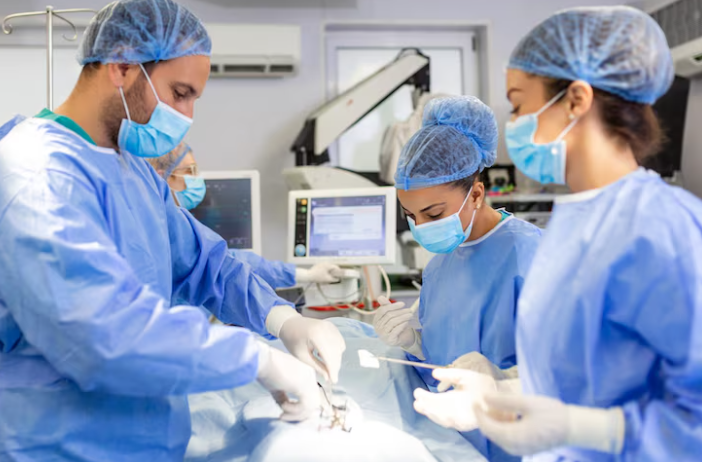
Every part of the hospital supports quick action. You see oxygen lines on the wall. You see bright lights over the table. You see sealed packs of tools ready for use. That setup keeps the focus on your pet, not on searching for supplies.
How Veterinary Teams Keep Surgery Safe
Trust grows when you know there is a clear plan. Veterinary hospitals use step-by-step checks before, during, and after surgery.
Before surgery staff
- Review your pet’s history and current medicines
- Run blood tests when needed
- Explain risks in plain words
- Place IV lines and start fluids
During surgery staff
- Use sterile gowns, gloves, and tools
- Watch heart rate, breathing, and blood pressure
- Adjust anesthesia so your pet stays asleep but stable
- Control bleeding and protect organs
After surgery staff
- Stay with your pet until it can sit or stand
- Check pain level and adjust medicines
- Watch for swelling, trouble breathing, or bleeding
- Teach you how to care for the incision and give medicines
The United States Department of Agriculture describes strict standards for animal care and surgery conditions under the Animal Welfare Act. These rules guide lighting, temperature, cleaning, and record-keeping.
The Role Of Clear Communication With Families
Emergency surgery shakes families. You face fear, shock, and quick choices. Veterinary hospitals know this strain. They use clear talk to cut confusion.
Staff tell you three things. What is wrong? What the surgery can change. What cannot change. They avoid sugar coating. They answer blunt questions like “Could my pet die?” with respect and honesty.
You should expect the team to
- Explain the diagnosis and why surgery is needed now
- Describe the steps of the surgery in simple terms
- Review costs and payment options without pressure
- Give written discharge instructions you can follow at home
That plain talk helps you feel some control when life feels fragile. It also helps you spot problems early during recovery.
What You Can Do Before An Emergency Happens
You cannot predict every crisis. You can still prepare. Three simple steps help you move faster when minutes count.
- Find your closest 24-hour veterinary hospital and save the number in your phone
- Keep a short medical history for your pet, including medicines and allergies
- Set aside a small fund or line of credit for urgent care
You can also ask your regular clinic where they send emergency surgery cases. That way, you know the plan before you need it.
Why Trust Holds Even When Outcomes Hurt
Emergency surgery does not always end the way you hope. Some pets arrive too sick or hurt. Outcomes can sting. Trust does not mean every story ends with a cure. Trust means you believe the team used every honest tool and skill to fight for your animal.
Veterinary hospitals earn that trust through constant practice, open talk, and strong respect for both animals and families. When your pet faces sudden bleeding, a torn organ, or a blocked stomach, you deserve that level of care. You deserve a place that meets panic with calm action and clear steps. That is why so many people turn to veterinary hospitals when every second feels heavy, and every choice feels sharp.