
You might be feeling a mix of worry and confusion right now. Maybe your child’s dentist mentioned an “impacted canine” on an X‑ray, or you were told that your own eye tooth is stuck and might need surgery. Perhaps you’ve also started looking into options like North Scottsdale dental implants. You nod in the chair, but inside you are thinking, “Why is this such a big deal, and why do I suddenly need an oral surgeon?”end
That reaction is very common. Impacted canines usually do not hurt at first. They hide quietly in the bone while orthodontists talk about timing, surgery, and long term bite health. It can feel like you went from a routine checkup to a medical problem without any warning.
Here is the short version. Impacted canines are teeth that should be in the smile line, but instead are trapped in the bone or gum. They play an important role in how you chew and how your smile looks. Because of their position near sinuses, roots of other teeth, and important nerves, treatment often calls for the skill of an oral surgeon and implant dentist. When handled well and at the right time, the outcome is usually very good. When ignored or rushed, problems can grow quietly for years.
So where does that leave you right now? You do not need to become a dental expert. You just need to understand why this tooth matters, why an oral surgeon is often involved, and what choices you actually have.
What exactly is an impacted canine and why does it matter so much?
Upper canines are sometimes called “cornerstone” teeth. They guide your bite from side to side, support your lips, and help shape your smile. In a normal situation, they appear around ages 11 to 13. When they do not come in on their own and remain trapped, they are called impacted canines. You can find a simple overview of tooth impaction from MedlinePlus in their section on impacted teeth.
Impaction can happen for several reasons. There may not be enough space. Baby teeth might not fall out on time. The canine might be turned or sitting too high in the bone. Sometimes there is a family pattern, so if a parent had an impacted canine, a child is more likely to have one.
At first, nothing seems wrong. The baby canine may still be in place. There is no pain. That is why many families feel surprised when an orthodontist shows a panoramic X‑ray and points to a tooth that is hiding above the front teeth. Yet this quiet problem can slowly affect the roots of nearby teeth, disturb the bite, and change the way the upper jaw develops.
Because of this tension between how “fine” things feel and how serious the X‑ray looks, you might wonder whether surgery is really necessary, or whether braces alone can solve it.
Why an oral surgeon is often needed instead of “just braces”
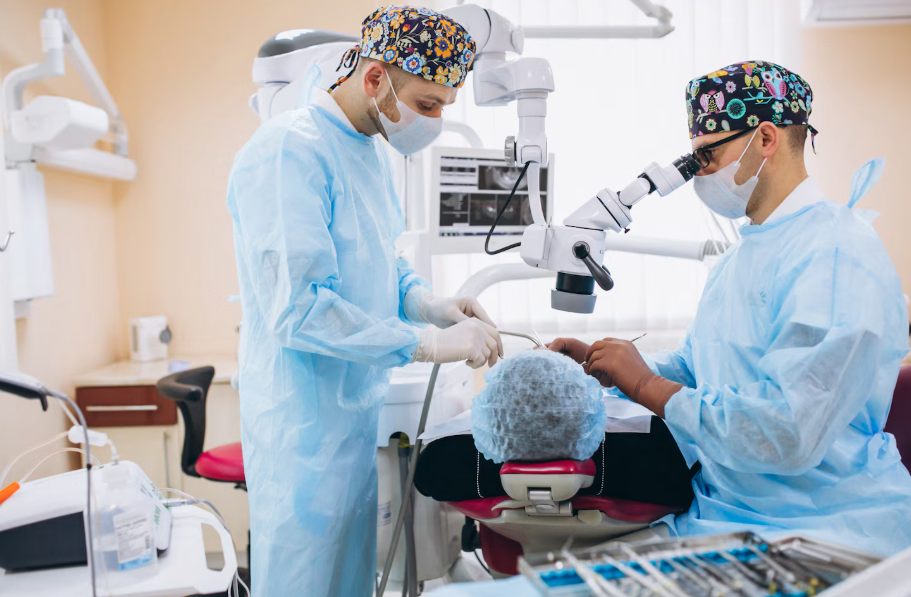
Orthodontists are experts at moving teeth that are already in the mouth. Impacted canines are different. They can be buried deep in bone, close to the roots of incisors, or near the sinus floor. Accessing that tooth, exposing enough of it for a bracket, or safely removing it if needed is a surgical job.
Modern guidelines from sources such as the NCBI review on impacted canines and their management show that timing and planning are crucial. The surgeon and orthodontist usually work as a team. The orthodontist makes room and plans the direction of movement. The oral surgeon exposes or removes the tooth in a way that protects surrounding structures.
Here is where stress often increases. Surgery brings up worries about pain, cost, healing, and rare complications. You might imagine your child under anesthesia and feel your stomach tighten. You might also worry about missing school or work, and whether insurance will help.
Yet there is another side to this. When an oral surgeon and implant dentist is involved early, several important goals can be met.
- The impacted canine can often be guided into place instead of being lost.
- The roots of nearby teeth are monitored and protected.
- If the tooth cannot be saved, a plan for a future implant can be built into the orthodontic treatment.
Research published by the Journal of the American Dental Association, such as the study shared by A.T. Still University on impacted maxillary canines, shows that early diagnosis and coordinated care reduce the risk of root damage and improve long term outcomes.
So the real question is not “surgery or no surgery.” The real question is how to handle this tooth in a way that protects your bite, your smile, and your options for the future.
What are the real risks and benefits of involving an oral surgeon?
When you hear that an oral surgeon is needed, it can sound extreme. It may help to see the trade offs more clearly. The table below compares some common paths patients consider for treatment of impacted canines.
| Approach | What it involves | Main benefits | Main risks or limits |
|---|---|---|---|
| “Watch and wait” with no surgery | Periodic X‑rays and checkups. No active exposure or removal of the canine. | No surgery right now. Lower immediate cost and no recovery time. | Tooth may damage nearby roots. Space can close. Future surgery may be harder. May end up losing the canine. |
| Braces alone without surgical access | Orthodontist places braces and tries to create space, hoping the canine erupts. | Non surgical at first. Can help if the tooth is only mildly delayed. | If the tooth is truly impacted, braces alone will not bring it in. Time and money may be spent without solving the core issue. |
| Exposure and orthodontic traction by an oral surgeon | Surgeon uncovers the canine and attaches a bracket or chain. Orthodontist gently pulls the tooth into place with braces. | Best chance to keep the natural canine. Better bite guidance and smile symmetry. Problem addressed before it worsens. | Requires surgery and healing. Some short term discomfort and cost. Success depends on tooth position and root health. |
| Removal of canine and future implant planning | Surgeon removes the impacted tooth. Orthodontist shapes the space. Later, an implant dentist places a replacement tooth. | Useful when the canine is in a very poor position or has damaged roots. Long term stable replacement with a dental implant. | Natural tooth is lost. Multi step process over time. Requires enough bone and good oral health for an implant. |
Seeing these options side by side often reduces fear. You can recognize that an oral surgeon is not brought in just to “do more.” They are there to keep choices open, protect nearby teeth, and plan for a future where your bite works well and your smile looks natural.
Three steps you can take right now to protect your options
So, what can you do today, while you are still weighing choices and trying to calm your mind?
1. Ask for a clear, shared treatment plan
Request a meeting where the orthodontist and the oral surgeon are on the same page. This can be in person or through shared notes. Ask these questions in simple language.
- Where exactly is the impacted canine located?
- What are the chances it can be brought into place?
- What happens if we do nothing for a year?
- If the tooth cannot be saved, how will an implant or other option be planned?
A coordinated plan for impacted canine surgery should cover timing, type of anesthesia, expected healing, and how braces will work with the surgical steps.
2. Understand anesthesia, pain control, and recovery in advance
Fear of pain is often larger than the pain itself. Ask exactly what type of anesthesia will be used. Local numbing, IV sedation, or general anesthesia are all possible depending on complexity and age. Clarify how long the procedure should take and what the first 48 hours at home will be like.
Plan ahead for soft foods, cold packs, and pain medicine as recommended. Arrange a quiet day or two after surgery with light activities. When you can picture the process step by step, the unknown shrinks, and so does the fear.
3. Look at long term function, not just the next appointment
It is natural to focus on getting through the next visit. Try to also ask how each choice affects the next 10 or 20 years. Will keeping the natural canine improve chewing and protect other teeth. If the tooth is removed, will there be enough bone later for an implant. How will the smile look if a lateral incisor is moved into the canine spot instead.
Framing decisions in terms of long term function and appearance can make it easier to accept short term inconvenience. It also helps you feel like an active partner in care, rather than someone things are simply happening to.
Moving forward with more confidence and less fear
Hearing that you or your child has an impacted canine can shake your sense of “everything is fine.” It is okay to feel worried or even overwhelmed. Those feelings simply mean you care about the outcome.
The good news is that with early diagnosis, thoughtful planning, and the right specialists, impacted canines are very manageable. An experienced oral surgeon and implant dentist can work with your orthodontist to keep natural teeth when possible, protect nearby roots, and design a strong, attractive bite even when the tooth cannot be saved.
You do not have to solve everything in one day. Start by asking for clear explanations, written treatment options, and honest answers about risks and benefits. Step by step, you can move from confusion to clarity, and from fear to a quiet confidence that you are making the best choices for a healthy, lasting smile.