
Key Takeaways
- Expanded Role: FNPs provide comprehensive, patient-centered care across the lifespan, working autonomously in diverse healthcare settings.
- Educational Pathways: Aspiring FNPs pursue MSN or DNP programs with family practice concentrations, combining coursework with supervised clinical hours.
- Licensing & Certification: Graduates must earn national FNP certification (ANCC or AANP) and meet state-specific licensure requirements.
- Clinical Competencies: Success depends on advanced assessment, diagnostic, and treatment planning, as well as soft skills like communication and teamwork.
- Professional Growth: Building networks, engaging in mentorship, and staying up to date on industry trends support career advancement and lifelong learning.
Understanding the Role of a Family Nurse Practitioner
Family Nurse Practitioners (FNPs) are advanced practice registered nurses who deliver broad, comprehensive healthcare services to individuals and families throughout their lives. Across primary and specialty care settings, FNPs diagnose medical conditions, prescribe treatments, and provide preventive care, while coordinating care with other healthcare professionals. For registered nurses, advancing to the FNP role means expanding their impact on patient wellness and championing holistic, patient-centered care. If you are interested in exploring FNP programs in Florida, you’ll find a variety of educational pathways suited to different nursing backgrounds.
This professional evolution can bring greater independence and authority. FNPs are trained to work autonomously, manage chronic and acute health problems, and play key roles in promoting health education within diverse communities. The demand for well-prepared FNPs continues to grow due to physician shortages and an increasing emphasis on preventive care.
Educational Pathways to Becoming an FNP
Current RNs who aspire to become FNPs must complete rigorous graduate-level studies. Most choose a Master of Science in Nursing (MSN) or Doctor of Nursing Practice (DNP) with a concentration in family practice. Programs at St. Thomas University are designed to strengthen advanced clinical reasoning, pharmacology, and diagnostic acumen. Along with didactic coursework, students complete hundreds of supervised clinical hours, during which they hone practical skills across various healthcare settings. The American Nurses Association provides extensive information on various advanced practice roles and their educational requirements.
Choosing a program accredited by a reputable nursing accrediting body ensures the education received meets national standards and qualifies graduates for licensure. Prospective FNPs should research program prerequisites, such as a BSN degree, minimum GPA, and nursing experience requirements. Part-time, full-time, online, and hybrid programs are widely available to accommodate diverse schedules and responsibilities.
Licensing and Certification Requirements
Upon graduation, earning national certification is the next essential step. The American Nurses Credentialing Center (ANCC) and the American Association of Nurse Practitioners (AANP) both offer widely recognized FNP certification exams. Successfully passing one of these exams allows candidates to use the FNP credential. State-specific licensure also requires background checks, application fees, and ongoing continuing education. Each state board of nursing provides detailed licensure requirements and scope-of-practice guidelines, so it is important to stay up to date with local regulations.
Developing Clinical Competencies
Thriving as an FNP hinges on developing strong clinical competencies. FNPs must master complex patient assessments, create and adjust treatment plans, and confidently interpret diagnostic tests. Equally important are soft skills such as clear communication, empathetic patient interactions, and effective collaboration within interdisciplinary teams. Many FNP programs offer structured mentorships in which experienced preceptors guide students through real-world challenges and help refine these essential abilities.
Actively engaging in clinical rotations, seeking opportunities to manage diverse patient populations, and receiving constructive feedback from mentors can significantly accelerate professional growth. Continuous learning and skill-building are vital for success and satisfaction in advanced practice roles.
Navigating Emotional and Professional Identity Shifts
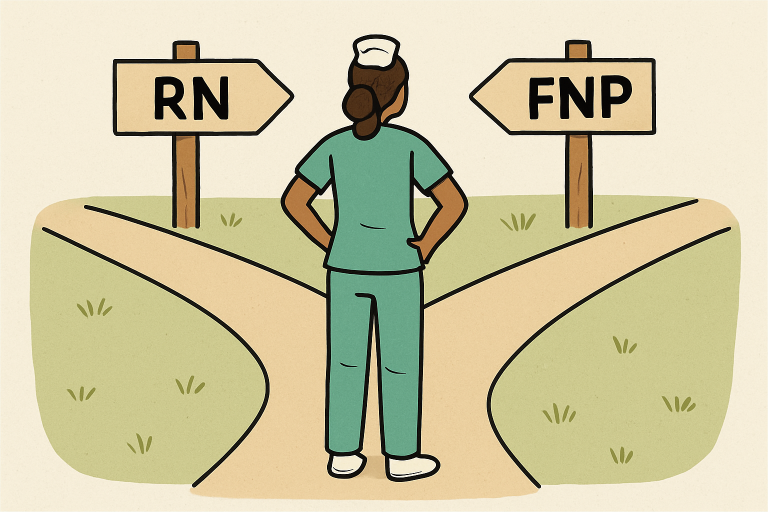
The transition from RN to FNP often comes with emotional challenges. As nurses step into advanced roles, it is not uncommon to experience self-doubt, anxiety, or imposter syndrome. Shifting from a task-oriented RN role to a comprehensive, decision-making FNP position requires time and mindset adjustments. Recognizing that these emotional responses are normal can be reassuring. Proactively seeking support from faculty, mentors, or professional peer groups helps new FNPs process these changes and build confidence in their capabilities.
Building a Professional Network
Developing a strong professional network is invaluable as you progress in your FNP career. Engagement in nursing associations, such as the American Academy of Nurse Practitioners Certification Board, provides access to continuing education, networking events, and up-to-date policy news. Attending local or national conferences and participating in online forums inspires knowledge sharing and offers mentorship from seasoned practitioners. Networking not only opens doors to career opportunities but also fosters ongoing professional and personal development.
Staying Informed About Industry Trends
Healthcare is a dynamic field, and FNPs must be adaptable lifelong learners. Keeping abreast of emerging medical research, policy changes, and technology trends is essential. Participating in annual conferences, subscribing to leading industry publications, and taking advantage of digital learning opportunities help maintain clinical excellence and ensure safe, evidence-based patient care. FNPs should regularly consult authoritative sources and proactively seek new knowledge as practice guidelines evolve.
Final Thoughts
The path from RN to FNP is rigorous yet deeply rewarding. With the right combination of advanced education, clinical experience, certification, and professional networking, registered nurses can successfully navigate this life-changing transition. Embracing new responsibilities, adapting to evolving roles, and remaining dedicated to lifelong learning will ensure effective patient care and lasting career satisfaction as a Family Nurse Practitioner.