
You might be feeling pulled in two directions at once. On one side, you are trying to keep up with your child’s cleanings, fluoride, and braces conversations. On the other, you are worrying about a parent’s dentures, dry mouth, or a sudden toothache that seems to have come out of nowhere. With Albuquerque same day crowns as an option for faster restorative care, it can feel like you are running two completely different health systems under one roof.end
Because of that tension, you may be wondering if there is a way to make dental care feel less scattered and more connected. That is where family dentistry comes in. A family dentist cares for children, adults, and seniors in one place, which means the story of your family’s oral health is understood as a whole, not as a collection of one-off visits.
In simple terms, here is the idea. Children need guidance and prevention. Adults need maintenance and early intervention. Seniors often need support for complex changes. A good family dentist understands all three stages and helps every generation move through them with less stress, fewer surprises, and a clearer plan.
Why does dental care feel so fragmented between kids and seniors?
It often starts with good intentions. You take your child to a pediatric dentist because the space feels fun and child friendly. Your aging parent sees a separate dentist who “does dentures.” You might see someone else entirely near your work. Before long, you are juggling multiple offices, different advice, and different treatment styles.
That fragmentation has a cost. It is not only the time you spend driving to different places or filling out the same forms again. It is the emotional weight of repeating medical histories, worrying that one provider might not know what the other found, and trying to understand conflicting recommendations on your own.
Consider a simple example. Your child has early signs of enamel weakness. Maybe your parent has a long history of cavities and tooth loss. Those two facts are related. Genetic tendencies, family brushing habits, and shared diets all play a role. When each person goes to a different office, that pattern might never be seen. A family dentist, who treats you all, can connect the dots and suggest earlier, smarter prevention for the younger generation.
On the senior side, the stakes are often higher than people think. Gum disease is linked with other chronic conditions, and missing teeth can affect nutrition, speech, and confidence. The Health Resources and Services Administration points out that untreated oral disease is still common and can affect overall health, especially for vulnerable groups. So when a parent shrugs off bleeding gums or a loose tooth, it is not just a minor annoyance. It can be a sign of something deeper.
So where does that leave you, caught in the middle, trying to do right by everyone?
How does a family dentist actually bridge pediatric and senior care?
A thoughtful family dental practice does more than clean teeth for all ages. It creates continuity. The same team watches a child grow, sees that child become an adult, and often helps that adult care for their own parents. Over time, that continuity builds insight that no form or questionnaire can replace.
Here is what that looks like in everyday life.
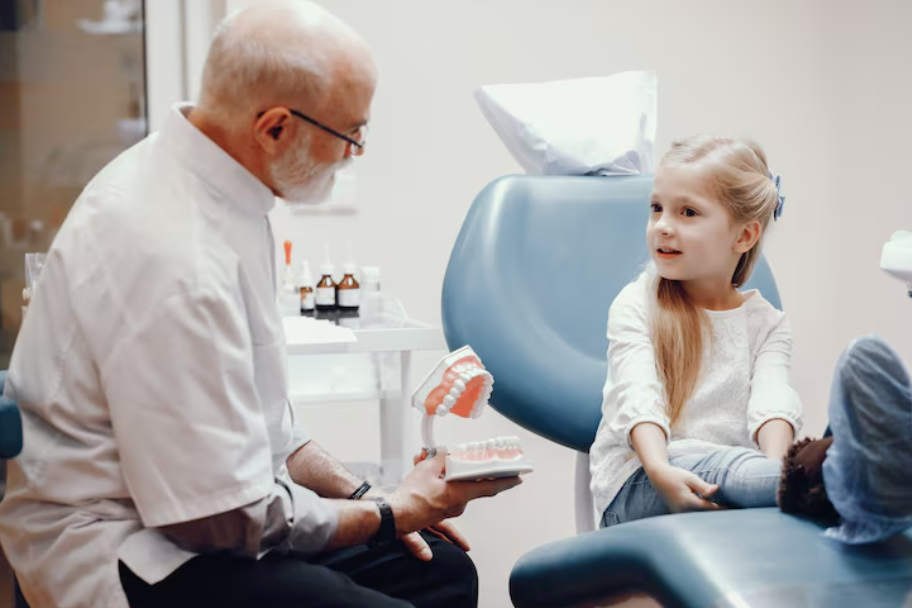
For children, the focus is usually prevention and comfort. Regular cleanings, fluoride, sealants, and gentle coaching around brushing and food choices. The goal is to build trust, reduce fear, and catch small issues early. When the same family dentist knows that a grandparent struggles with advanced gum disease, they can watch that child a bit more closely for early warning signs, and they can explain why certain habits matter in a way that connects generations.
For adults, the focus often shifts to stress, busy schedules, and wear on teeth. Clenching, grinding, old fillings, and early gum problems are common. Because the dentist already knows the family pattern, they can tailor advice. For example, if your parent has partial dentures because of years of untreated decay, your dentist can talk with you about realistic steps to avoid repeating that path, such as more frequent cleanings or earlier treatment of small cavities.
For seniors, the concerns usually become more complex. Medications that dry the mouth, arthritis that makes brushing harder, or medical conditions that affect healing can all change the way dental care is planned. The American Dental Association highlights how aging affects teeth, gums, and oral tissues, which means a senior friendly approach is not optional. A family dentist who has known a patient for years can adjust gently. They can suggest tools that make home care easier, simplify treatment plans, and coordinate with physicians when needed.
Because the same office is guiding all of you, you do not have to act as the go between. The dentist can see patterns, anticipate problems, and help you make decisions that serve both the child you are raising and the parent you are supporting.
What should you compare when choosing family dentistry for all ages?
Choosing a family dentist is not just about who is closest or who has the newest equipment. It is about finding a team that understands how pediatric needs and senior needs fit together. It can help to compare a few key points side by side.
| Question to Consider | Separate Pediatric & Senior Dentists | Unified Family Dentist |
|---|---|---|
| Medical and dental history | Scattered between offices. You repeat details and hope nothing is missed. | Centralized in one place. Patterns across generations are easier to spot. |
| Emotional comfort for children and seniors | Different styles and environments. More adjustment and anxiety. | Familiar team and setting for everyone. Trust builds over time. |
| Care coordination for chronic conditions | You coordinate between providers on your own. | The same office coordinates and adapts care as health needs change. |
| Time and scheduling | Multiple offices, different days, extra travel. | Group or back to back appointments for family members. |
| Long term prevention strategy | Each provider focuses on their patient in isolation. | Shared prevention plan that reflects family risks and habits. |
Research supports a connected approach. The Centers for Disease Control and Prevention notes that early prevention and regular care can reduce serious oral disease and lower costs over time. When a single dentist supports your family over years, those preventive efforts tend to be more consistent and better tailored to your real life.
What can you do right now to simplify dental care for every generation?
You do not need to solve everything in one day. Small, deliberate steps can bring a lot more calm into the way your family handles oral health.
1. Map out your family’s current dental situation
Start with a simple list. Write down who in your family is seeing which dentist and for what. Include children, yourself, a partner, and any parents or grandparents you help. Note how often each person is going, any recurring issues like cavities, gum problems, or tooth pain, and any medical conditions or medications that could affect the mouth.
This does two things. It gets the swirling information out of your head, and it gives you a clear picture to bring to a family dentist. You will be able to say, “Here is our starting point,” which makes it much easier for a provider to build a plan that fits everyone.
2. Ask specific questions when you contact a family dentist
When you call or schedule a visit, be direct about your situation. Mention that you are looking for care that supports children and seniors together. Ask how they approach preventive care for kids, how they manage complex needs for older adults, and whether they offer longer or grouped appointments for families.
You can also ask about their experience with issues that matter to you. For example, “My mother has diabetes and dry mouth. How would you adapt her care?” or “My child is very anxious. How do you help kids feel safe?” The answers will tell you more than any brochure.
3. Build one shared routine that works for your household
Even before you change dentists, you can bring more order to home care. Choose one time in the morning and one time in the evening that works for most people under your roof. Keep brushing supplies easy to reach. For a parent with limited mobility, consider electric toothbrushes or floss holders. For a child, use a simple timer or a favorite song that runs for two minutes.
You do not have to make it perfect. The goal is consistency. When a family dentist sees that you already have a steady routine, they can fine tune it instead of rebuilding from scratch.
Bringing your family’s oral health under one roof
Caring for children and aging parents at the same time is a lot to carry. Feeling stretched thin does not mean you are failing. It means you are human and you care. A strong family dentistry service cannot remove every worry, yet it can remove a surprising amount of confusion and chaos.
With one trusted team following your child from their first cleaning to adulthood, and supporting your parents through the changes that come with age, dental visits become less about crisis and more about steady guidance. You gain one place to ask hard questions, one record of your family’s history, and one partner who understands where you have been and where you are headed.
You do not have to fix everything overnight. Start with that simple map of who is seeing whom, ask clear questions when you reach out to a family dentist, and choose one small change you can make at home. Each step brings you closer to a calmer, more connected way of caring for every smile in your family, from baby teeth to dentures.