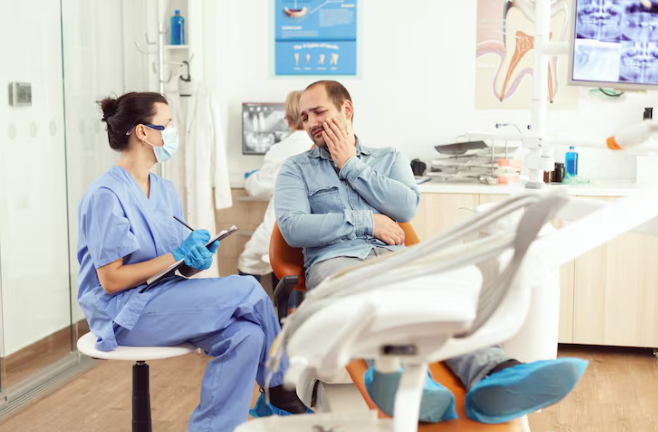

You might be here because something went wrong very suddenly. A tooth cracked on a piece of popcorn, your child woke up in tears with a swollen face, or you have a throbbing toothache that will not let you sleep. Before this, dental care might have felt routine. Cleanings, quick checkups, maybe a filling here or there. Then, almost overnight, it turned into a crisis, and you realized you might need a dentist in San Jose CA.
If you are feeling worried, guilty for “waiting too long,” or unsure whether this is serious enough to call a dentist, you are not alone. Dental emergencies are confusing. They sit in that gray area between “I can ignore this” and “Do I need the ER right now?” The short version is this. A trusted family dentist for dental emergencies helps you sort that out, handles most urgent problems quickly, and keeps small issues from turning into medical emergencies or big bills.
So where does that leave you right now? It means you do not have to figure this out by yourself. Understanding how a family dentist approaches emergency situations can help you breathe a little easier and make calmer decisions, even when you are in pain.
Is This Really An Emergency, Or Can A Family Dentist Handle It?
The hard part in the moment is deciding what kind of help you actually need. The pain feels like a crisis, your mind jumps to the worst case, and you might feel tempted to rush straight to the hospital. Sometimes that is the right choice. Many times, though, a family dentist for urgent care is exactly who you need.
Here is the basic problem. Most hospital emergency departments are not set up to fix teeth. They can manage infections, give pain relief, and rule out life-threatening issues, but they usually cannot provide the actual dental treatment you need. The American Dental Association has guidance on emergency department referrals for dental problems, and a lot of it comes down to this mismatch. You get temporary relief, then you still have to see a dentist later.
Because of this, people often end up paying twice. Once for the ER visit, and again for the dentist who finally fixes the tooth. On top of that, the time you spend waiting in an ER is time that the dental problem can worsen. An untreated infection can spread. A broken tooth can fracture further. A knocked-out tooth can lose its chance of survival.
So what changes when you have a family dentist you can call in an emergency? You get a guided path. You explain your symptoms, they ask the right questions, and they tell you clearly whether you should come in, manage at home for a short time, or go straight to the hospital.
What Kinds Of Emergencies Can A Family Dentist Treat Quickly?
Think about the situations that send people into a panic. A sharp toothache at midnight. A front tooth knocked out in a weekend soccer game. A crown that pops off the night before an important event. These are the moments when having a relationship with a family dentist really matters.
Here are some common emergencies a family dentist can usually handle promptly.
Severe toothache or swelling. Throbbing pain, especially if it wakes you from sleep, suggests infection or deep decay. The American Dental Association has evidence-based guidance on when antibiotics are useful for dental pain and swelling. The key point is that painkillers or antibiotics alone almost never solve the root cause. A family dentist can diagnose the problem, open the tooth to relieve pressure if needed, and plan a root canal or extraction. That is real treatment, not just temporary relief.
Broken, chipped, or cracked tooth. Maybe you bit something hard or had a minor accident. A family dentist can smooth sharp edges, repair fractures with bonding, or protect the tooth with a crown. The faster you are seen, the better the chance of saving the tooth and avoiding deeper cracks that reach the nerve.
Knocked-out or loosened tooth. Time matters here. If you reach a dentist within an hour with a knocked-out adult tooth, there is a better chance it can be replanted. Your dentist can guide you on how to handle the tooth on the way in. For a very loose tooth, they can stabilize it and monitor healing.
Lost fillings, crowns, or broken dentures. These may not always be life-threatening, but they are urgent, especially if they affect your ability to eat, speak, or feel confident in public. A family dentist can often offer same-day or next-day solutions, even if it is a temporary fix while a permanent one is made.
So how do you decide between home care, a dentist, or ER in the moment?
Family Dentist Or ER: How Do You Choose In A Crisis?
It helps to think in terms of “Can this wait a few hours for a dentist, or is my overall health at risk right now?” Dental emergencies sit on a spectrum. At one end, you have issues that are painful and urgent but safe for a dentist to handle. At the other end, you have true medical emergencies where the ER is the only right choice.
The American Dental Association offers guidance on what counts as urgent emergency dental treatment. Using that, here is a simple comparison that can help you think more clearly when emotions are high.
| Situation | Best First Call | Why |
|---|---|---|
| Severe toothache without fever or facial swelling | Family dentist | Likely needs dental treatment, not hospital care. Dentist can diagnose and treat directly. |
| Facial swelling with fever, trouble breathing, or swallowing | Emergency room | Possible spreading infection affecting airway. This is a medical emergency. |
| Knocked-out adult tooth, no other injuries | Family dentist | Time-sensitive dental emergency. Dentist can attempt reimplantation. |
| Broken tooth with sharp edge but mild pain | Family dentist | Needs prompt repair, but usually not life-threatening. |
| Dental pain after major trauma, head injury, or heavy bleeding | Emergency room | Head or facial trauma must be cleared first. Dentist can treat teeth later. |
When you have an ongoing relationship with a family dentist, you do not have to figure this out alone. You can call, describe what is happening, and they can direct you to the right place. That phone call can save you hours of worry and unnecessary expense.
What Can You Do Right Now If You Think You Have A Dental Emergency?
You might still be in pain as you read this, or you might be trying to prepare in case something happens in the future. Either way, there are a few concrete steps that can make a real difference.
1. Call a family dentist and describe symptoms clearly
Even if it is after hours, many offices have an emergency line or instructions on their voicemail. When you call, be ready to share:
- Where the pain is and how long you have had it
- Whether you have swelling, fever, or trouble breathing or swallowing
- What triggered the problem, like an injury or biting something hard
- Any medications you have already taken
Clear information helps the dentist decide how soon you should be seen and whether you need urgent medical care first.
2. Use safe home measures while you wait
While waiting for your appointment, you can often ease symptoms safely.
- Use over-the-counter pain relief as directed on the label, unless your doctor has told you not to
- Rinse gently with warm salt water to reduce irritation
- Apply a cold pack on the outside of your cheek for swelling, in short intervals
- Avoid putting aspirin directly on the gums or tooth, which can burn the tissue
- Keep any broken pieces of tooth or a knocked-out tooth moist in milk or saline if advised
These steps do not replace treatment. They simply help you stay as comfortable and safe as possible until a dentist can see you.
3. Plan ahead for the next emergency
Once you are out of crisis mode, take a moment to prepare for the future. Emergencies are easier to handle when you are not starting from zero.
- Choose a family dentist and save their number in your phone
- Ask their office how they handle after-hours emergencies
- Keep basic supplies at home, like gauze, a small container with a lid, and over-the-counter pain relief
- Stay up to date on routine checkups, since many emergencies start as small problems that were silent for a while
Preparation does not stop bad luck from happening, but it does mean you are not scrambling for answers when every minute feels long.
Moving From Panic To A Plan With A Family Dentist
Dental emergencies have a way of showing up at the worst times. They wake you up at night, hit in the middle of a busy week, or involve a child who is scared and hurting. It is completely understandable if you feel overwhelmed or even a bit embarrassed that things got this bad.
The important thing is that you do not stay stuck in panic. A supportive family dental care provider can help you sort out what is urgent, what can wait a little, and what you can do right now to feel more comfortable. That kind of guidance turns a frightening situation into a manageable one.
You do not have to know all the answers. You only need to take the next step, reach out, and allow a professional to take it from there. With the right family dentist in your corner, even the worst dental emergencies become challenges you can get through, rather than crises you have to face alone.