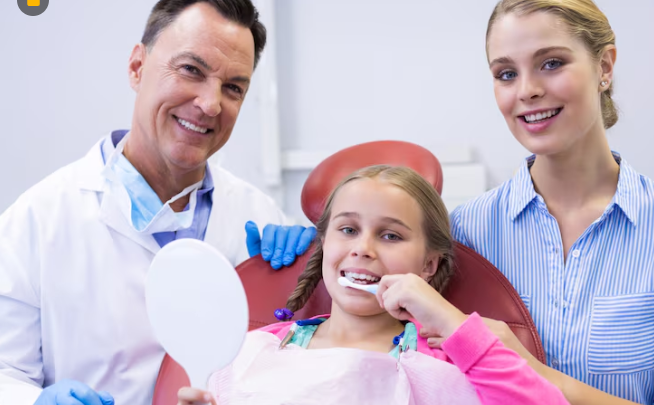

You might be feeling pulled in two directions right now. On one side, you want healthy teeth for yourself and your family, fewer emergencies, and less time in the dental chair. On the other side, you are aware of stains, chips, or gaps that make you hide your smile in photos or cover your mouth when you laugh. At our family dental office in Ann Arbor, MI, it can feel like you have to choose between “health” and “appearance,” between family dentistry and cosmetic dentistry.
Because of this tension, you might wonder if cosmetic care is just an extra, or if focusing only on cleanings and checkups means you are missing something important. The truth is that when both are done thoughtfully, family and cosmetic dental care work best together
So the short version is this. Family dentistry builds the foundation. Cosmetic dentistry refines and strengthens what is already there. When your general and cosmetic dentist looks at both at the same time, you get a smile that not only looks good, but also functions well and lasts longer.
Are You Choosing Between Health And Confidence When You Do Not Need To?
Think about how dental care usually shows up in real life. It starts with something small. A child has a cavity. You put off your own cleaning because work is busy. You notice a dark line on a filling in a front tooth. You tell yourself you will get to it “when things calm down.”
Then the emotional side kicks in. Maybe you feel a little embarrassed during a work meeting when you see yourself on video and notice your teeth look more worn or yellow than you remember. Or your teenager becomes self-conscious about a chipped front tooth after a sports injury. These little moments add up. They do not always cause physical pain, but they can quietly drain your confidence.
On top of that, there is the financial worry. You might be asking yourself if cosmetic work is “worth it” or if you should stick to only what insurance covers. It is easy to think of cosmetic dentistry as optional, like a luxury. Yet many cosmetic treatments also restore function, protect weakened teeth, and reduce the need for more complex care later.
This is where a combined approach to family and cosmetic dentistry starts to make sense. A general dentist who understands both sides can plan your care in a way that respects your budget, your time, and your goals for how you want to feel when you smile.
How Do Family Dentistry And Cosmetic Dentistry Support Each Other?
Family dentistry focuses on prevention and early treatment. This includes regular checkups, cleanings, fluoride, sealants for children, fillings, and guidance on daily habits. The goal is to keep teeth and gums healthy and to catch problems when they are still small.
Cosmetic dentistry focuses on how teeth look and how they fit together when you bite and chew. This might involve whitening, bonding, veneers, tooth-colored fillings, crowns, or reshaping teeth. The goal is to create a smile that fits your face and feels natural when you use it every day.
When these two are treated as one coordinated plan instead of separate categories, several important things happen.
First, prevention gets smarter. For example, if you are thinking about whitening, your dentist can time your fillings or crowns so they match the shade you want, instead of replacing them later. Research on oral health from sources like the National Institute of Dental and Craniofacial Research shows that consistent preventive care reduces the risk of decay and gum disease. When that preventive care is paired with cosmetic planning, you avoid doing the same work twice.
Second, restoration becomes more natural. Modern materials for fillings and restorations are designed to blend with your teeth and also handle everyday chewing. Guidance from the American Dental Association on direct restorative materials shows how tooth-colored options can be both strong and esthetic. That means a “simple” filling can also improve the look and shape of a tooth, not just fix a cavity.
Third, cosmetic choices become healthier. A good cosmetic plan never ignores the gums, the bite, or the jaw joints. For example, if you grind your teeth, whitening alone will not help. You might need a night guard and carefully shaped restorations so your teeth do not chip again. Information from clinical resources such as the StatPearls review of dental restorations explains how properly designed restorations protect teeth under stress. When your cosmetic work respects how your teeth function, it lasts longer and feels better.
So where does that leave you? It means the best “cosmetic” result often starts with a careful family-style evaluation. Your dentist looks at your health history, your daily habits, and your budget, then plans cosmetic improvements on top of a stable, healthy base.
What Should You Weigh When You Combine Family Care With Cosmetic Treatment?
To make this more concrete, it helps to compare a few common choices you might face with a general and cosmetic dentist. Here is a simple overview.
| Situation | Purely “Basic” Approach | Combined Family + Cosmetic Approach | What This Means For You |
|---|---|---|---|
| Front tooth with a cavity and discoloration | Standard filling that may not fully match the tooth color | Tooth-colored bonding shaped and shaded to match nearby teeth | Same tooth protected from decay, plus a more confident smile in photos |
| Worn, chipped edges from grinding | Monitor or smooth edges, basic night guard only | Night guard plus carefully rebuilt edges with bonding or veneers | Teeth protected from further wear, smile looks younger and more even |
| Multiple old metal fillings | Replace only if they break or hurt | Planned replacement with tooth-colored fillings over time | Gradual improvement in strength and appearance, spread out cost |
| Teen with crowding and staining | Cleanings, watch alignment, maybe braces later | Preventive care plus alignment plan and later whitening | Health managed now, self-esteem supported as they grow |
These are everyday examples, not extreme cases. They show how a combined approach to family and cosmetic dental treatment can often turn a “have to” procedure into an opportunity to improve both health and appearance.
What Can You Do Right Now To Move Toward A Healthier, More Confident Smile?
You do not need to decide everything at once. A few focused steps can give you clarity and control.
1. Get clear on what truly bothers you
Before you talk to a dentist, take a quiet moment and be honest with yourself. Is your main worry pain, frequent problems, or the way your teeth look when you speak or smile. Make a short list of what you would change if you could. For example, “I want fewer emergencies,” “I want my front teeth to look less chipped,” or “I want my child to have fewer cavities.” This helps your dentist separate what is urgent from what is important to you emotionally.
2. Ask for a “health first, appearance second” treatment plan
When you see your general and cosmetic dentist, tell them you are interested in both family and cosmetic options, but you want to start with health. A good plan usually begins with an exam, X rays when needed, and a cleaning. From there, your dentist can outline what needs attention now, what can wait, and which cosmetic steps can be paired with necessary treatment. Ask them to explain the trade offs in plain language, including costs and how long results are expected to last.
3. Think in phases instead of one big project
It is easy to feel overwhelmed if you imagine doing everything at once. Instead, ask how your care can be phased. For example, you might handle urgent decay first, then replace old fillings in the front teeth, then consider whitening or reshaping. Phasing helps you manage budget and time, and it also gives you a chance to see how each step feels before you decide on the next one.
How Can You Feel More At Ease About Your Next Dental Decision?
You do not have to choose between a healthy mouth and a smile you feel proud to share. When family dentistry and cosmetic dentistry are planned together, they reinforce each other. Preventive and restorative care protect your teeth and gums. Thoughtful cosmetic work supports your confidence and can even make it easier to keep your mouth clean and healthy.
If you feel worried, embarrassed, or simply uncertain about what to do next, know that many people feel the same way. You are not behind. You are just at a point where a more coordinated approach can make a real difference. The next step is simple. Talk with a dentist who understands both family care and cosmetic treatment, share your concerns openly, and ask for a plan that respects your health, your budget, and the way you want to feel when you smile.